
The goal of this series (“Complexities”) is simple: to get you to think more deeply about “human problems.”
Before starting, I want you to take a moment and answer this question: Have you, at any point in your life, wanted to be famous?
Maybe you wanted to be an astronaut, an accomplished musician, the “new Steve Jobs,” the next Tesla, an actor, an athlete, or something else entirely. More likely than not, you have. We can be honest; most of us have had our fair share of toothbrush concerts in the shower.
Yet despite this strong human desire to stand out—to be seen, to be acknowledged—most of us shy away from it. We cringe at the idea of standing in front of an audience and giving a presentation to more than twenty people. We want the recognition, the opportunity, and the audience, but we do not want to risk looking different in front of the people who might reject us.
We spend a strange amount of our lives trying to be noticed while carefully removing everything that might make us noticeable.
That bargain does not work. If your goal is to do anything remarkable, being recognizable is not a side effect. It is part of the price.

You Know Them by the Outline
Please entertain a simple experiment. If someone who did not know you had to describe you in a crowd of one hundred people, how well would they do? Be honest: could they describe you in any way, shape, or form that actually makes you stand out?
“Oh yeah, it is the guy with, like, brown hair. Average height… I think he works on some office job?”
That does not narrow it down much. Now compare it with:
“Yeah, the dude with the really long hair.”
A single qualifier, yet it narrows things down substantially. Again, be honest: would you be the first case or the second?
If I showed someone your silhouette among twenty others, would they recognize you?
Here is a simple example. Can you guess who I am talking about?
“An entrepreneur who wore a lot of black turtlenecks and circular glasses. There is some picture of him with his hand on his chin.”
Chances are some of you immediately knew I was talking about Steve Jobs. Now that I have mentioned it, the rest of you just went, “Oooooh yeah, that is right.”
Lessons from… cartoons?
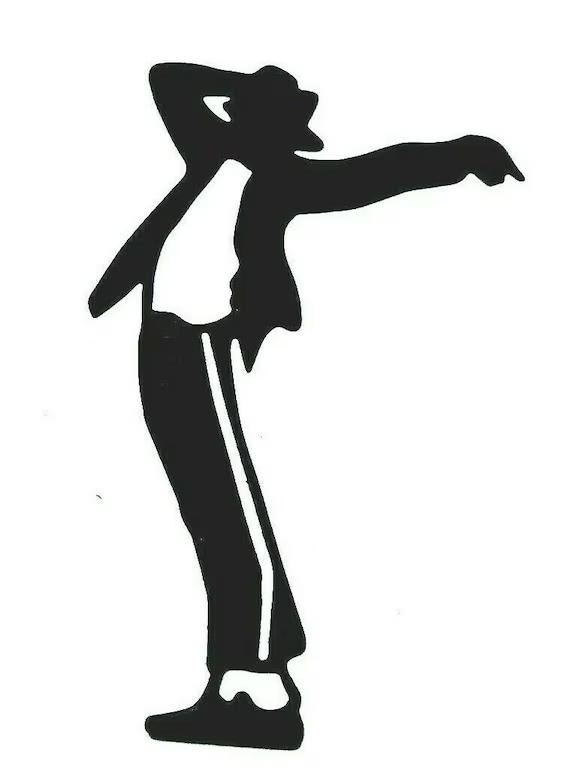
There is an old test in cartoon and character design: a good character should be recognizable by their silhouette alone. Remove the colors, the facial expression, the voice, and every tiny detail. If the outline is still unmistakable, the design is doing its job.
So let us try it. Take a look at the image below before reading any further. How many characters can you recognize from nothing but their silhouettes?
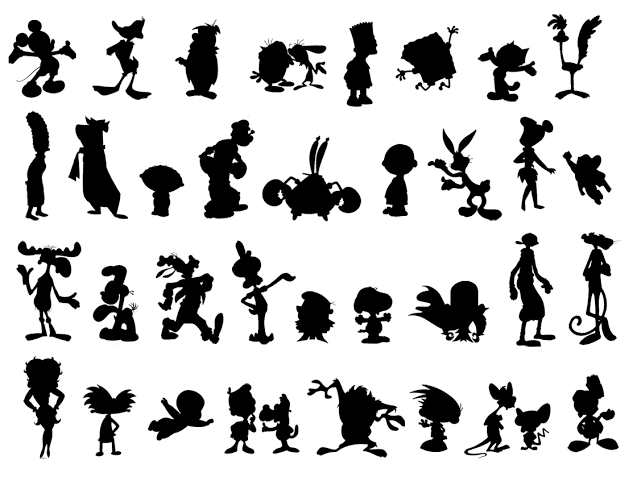
You probably recognized more than you expected. A mouse is just three circles until three very particular circles become that mouse. A tall head, an unusual hairstyle, an exaggerated posture, or a familiar object can carry an entire identity.
I believe the same principle applies to human beings. Obviously, we are not cartoons, and I am not suggesting everyone needs to turn themselves into a caricature. But our minds still remember people through contrast and recognizable patterns.
Psychology and Silhouettes
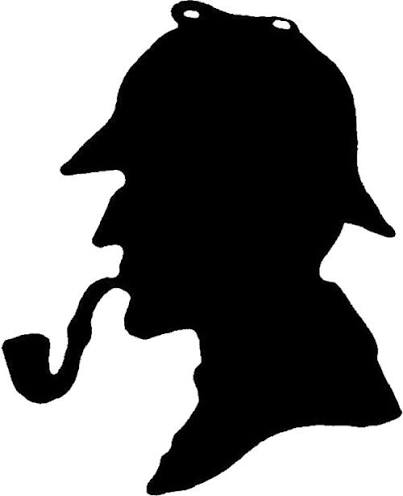
Psychologists sometimes call this the isolation effect, or the von Restorff effect: when one item is noticeably different from the things around it, it is more likely to be remembered. Distinctiveness gives the brain another retrieval cue. Instead of trying to recover “one of the many men in suits,” memory can reach for “the man in the purple suit.”
A silhouette takes this idea to an extreme. It strips away the noise and leaves only the larger shape—the posture, hair, clothing, and objects that make one figure different from another. Our visual system is remarkably good at using those structural cues to recognize what it has seen before. Standing out does not magically make someone important, but it does give memory a hook. Once people remember the hook, they have a much better chance of remembering the person and the work attached to it.
If we take a moment and think about it, how do people describe each other? They use what distinguishes them. Often, that means highlighting eccentricities, speech patterns, or the way we look.
This is not about being shallow. It is about quickly conveying information. Saying, “The woman with a beautiful smile who wants to be a millionaire, buy a decently sized home, and works in finance” does not really narrow it down, now does it?
Saying, “The older lady with the red glasses who always wears a pink sweater” will most likely get an immediate response.
There is a particular kind of compliment that proves personal branding works:
“I cannot remember his name, but you know—the guy with the long hair and the crazy shades.”
Everybody knows exactly who they mean.
Personal Branding Before the Business Jargon
What is personal branding before we bury it in business language? It is not just a color palette, a logo, or posting motivational sludge every morning. It is the collection of signals people reliably associate with you: how you look, what you make, what you believe, how you speak, and what you repeatedly refuse to compromise.

You do not need to be famous for this to matter. In a company, an industry, or a community, being “the person who explains impossible things clearly” is a brand. So is being “the woman in spectacular red coats,” “the engineer who always asks about the user,” or “the Puerto Rican dude with long hair who swears a lot and wears fancy suits.”
It is important to make a strong and lasting impression. We all know that. But how do we usually go about it?
By everyone doing the bloody same thing!
Picture yourself going to a networking event that will surely bring you career opportunities. Assuming you are male, let me guess: you are wearing black or brown dress shoes, khaki pants, a buttoned shirt, and, if you are feeling fancy, a business suit. Maybe you will bring a white business card with black or blue text and your company’s logo. You will make sure to speak in a professional manner while trying your best not to embarrass yourself.
Congratulations! You and all 10,000 attendees thought about the same thing.
You will be forgettable. And if you do not have anything to offer the other person (let’s be honest with ourselves here, most people at these events are just looking to leverage others for their own goals), they will not think about you for a second.
Ah, but the one man dressed in a full purple suit, plucked straight out of a parody of a pimp? That guy you will remember.
“Oh, it is the pimp guy.”
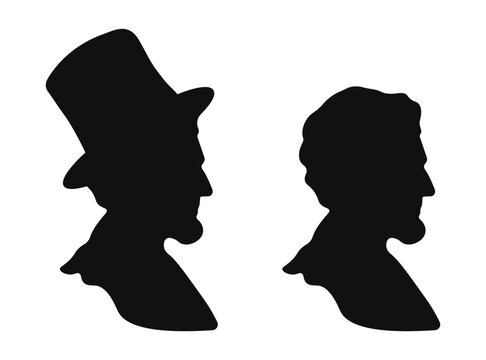
Some people are born with features that make them easily recognizable. Others are not so lucky and may need something—like, say, a top hat. If you have a physical difference, do not automatically shy away from it. Embrace it. That thing you have been taught to see as an “imperfection” may be one of your biggest assets.
Their silhouettes—and eventually yours—work because they are coherent. A few traits repeated consistently allow the outline to carry the identity.
Why Being Seen Feels Dangerous
Of course, if standing out were as simple as buying a purple suit, everyone would do it.
We are sarcastically taught as children, “If your friends jumped off a cliff, would you jump off with them?!”
The reality is that, statistically speaking, yes, most likely you would. I touched on this same instinct in Courage and Elephants. The pressure to follow the group applies just as much to the way we dress and act as it does to the things we are willing to say out loud.
Standing out is not merely a fashion decision. It creates social exposure.

For most of human history, belonging was protection. Being pushed outside the group could carry a real cost, so the mind became extremely attentive to rejection, status, and signs that we might have violated a norm. The setting has changed faster than that instinct has. A loud jacket at a conference is not exile from the tribe, but your nervous system may still treat the attention as a threat.
Several psychological forces pile on top of one another:
- The need to belong: Acceptance is not a shallow preference. It is a basic human motive, which means fitting in can feel safer than expressing a distinct identity.
- Fear of negative evaluation: The frightening part is often not visibility itself; it is surrendering control over what other people conclude once they look.
- Conformity: When a group appears unanimous, disagreement can make us doubt even our own perception. It is easier to borrow the group’s answer than defend our own.
- The spotlight effect: We tend to overestimate how closely other people notice our appearance and mistakes. The world feels like an audience because we experience the scene from the center of our own perspective.
- Identity uncertainty: A distinctive choice invites the question, “Is this really me?” Blending in lets us postpone answering it.

The result is a quiet self-protection strategy: sand down the unusual edges before anybody else has the chance to criticize them. Wear the safe thing. Share the safe opinion. Make the safe project. Wait for somebody else to go first.
It is worth understanding that conformity is not simply cowardice or a lack of imagination. Sometimes we follow a group because belonging feels safer; psychologists call that normative influence. Other times we assume the group must know something we do not; that is informational influence. In both cases, the uncomfortable sensation of being the only person standing apart becomes evidence that we must be wrong—even when the evidence in front of our eyes says otherwise.
Asch’s conformity experiments made that tension painfully clear. People sometimes agreed with an obviously incorrect group judgment rather than be the lone dissenter. More importantly, conformity dropped sharply when even one other person broke the group’s unanimity. We do not always need the whole room to agree with us. Sometimes we just need proof that standing apart is survivable.
Fear of negative evaluation creates another loop. You imagine the judgment, avoid the thing that might trigger it, and immediately feel relief. That relief teaches your brain that hiding worked, making avoidance more attractive the next time. The strategy succeeds at reducing immediate discomfort. It also makes growth unlikely, because growth usually requires being evaluated before you feel ready.
The spotlight effect adds a cruel little joke: while we are busy imagining that everybody is studying our every mistake, most people are thinking about themselves. We overestimate how visible our awkwardness is, yet underestimate how deliberate we need to be if we actually want to become memorable.
We Celebrate the People Who Broke the Rule
Here is the contradiction: we punish difference at close range and celebrate it at a distance.
We elevate celebrities, artists, founders, and athletes partly because they are recognizable. We praise them for extravagant clothes, unusual voices, obsessive habits, and opinions that would make us nervous if a coworker displayed them at lunch. Their difference is packaged as authenticity. Our own difference feels like a liability.
There is a real cognitive dissonance here: I admire people who stand apart lives right beside I must not stand apart. But naming the contradiction is only the start. How do both beliefs survive in our minds?
Distance Changes the Risk
A celebrity’s outfit does not threaten our belonging. We can enjoy the spectacle without wearing it into our own social group and absorbing the consequences. Admiration is cheap when somebody else takes the risk.
Status Changes the Interpretation
Once a person is successful, eccentricity gets reread as evidence of genius, confidence, or authenticity. The same behavior from an unknown person may be labeled attention-seeking or “cringe.” Success gives people permission retroactively.
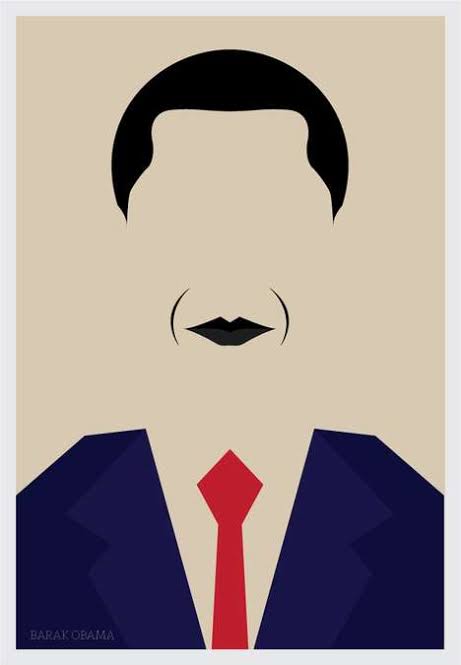
This also gives us a convenient way to resolve the dissonance without changing our own behavior: They can pull it off because they are famous. Their status becomes the explanation for their difference, even when that difference may have helped create the status in the first place. We turn cause and effect into a circle that always ends with us staying safe.
We See the Survivors
We remember the distinctive people who became icons. We rarely build documentaries around the thousands who took a creative risk and were ignored. That selection bias can make standing out look both more magical and more guaranteed than it is.
We Want Two Opposite Things
Optimal distinctiveness theory describes the tension nicely: people want inclusion and differentiation at the same time. We want to belong to the group, but we also want to feel like meaningful individuals within it. Too much sameness erases us; too much difference isolates us.
This is why the goal is not maximum weirdness. Distinctiveness works best when people can still place you somewhere meaningful: part of the profession, community, or conversation, but unmistakably yourself within it. You need enough familiarity to be understood and enough difference to be remembered.

Attention Has a Price
A reality of the world is that the moment you open your mouth and give your opinion on anything, make a joke, or even offer a seemingly inoffensive comment like, “I put syrup on my hot dogs,” there will be people who immediately dislike what you say. They will think you are stupid and try to tear you down.

But just as there will be people who hate what you said, there will be people who love it. The goal is to focus on the group that has your back.
The fantasy is that you can become memorable while remaining universally liked. You cannot.
The moment you become specific enough for one group of people to love, you become specific enough for another group to dislike. Some people will see long hair and crazy shades and think they are incredible. Others will think they are ridiculous. Both reactions prove the signal arrived.
In the pursuit of always pleasing everyone, all you achieve is being forgettable. You hold the mildest takes. You do not open up with anyone. You are afraid to joke, to dress a little differently, or to paint your car another color. This constant fear of being judged is exactly what will keep you from achieving many of your goals.
How do you expect people to recognize you if you refuse to become recognizable?
Standing out does not guarantee that people will like you. Blending in nearly guarantees that they will not remember you.
This is not just about physical appearance. It is also about the mind.
For example, I know people could quickly describe me as “the Puerto Rican dude with long hair who swears a lot and also wears a lot of fancy suits.” I am not afraid of being the loud one in a room, getting on a soapbox, or being overly dramatic, opinionated, and passionate about a topic. I am not blind to the stares of judgment I receive, but every time I open my mouth, I gain just as many supporters.
That does not mean all attention is useful. Being recognizable for cruelty, empty provocation, or a costume unrelated to your work is not the same as building a meaningful identity. Difference is an amplifier, not a substitute for substance.
The better question is not, “How can I make everyone look at me?” It is, “What true part of me or my work am I willing to make impossible to miss?”
The Only Person Who Raised His Hand
A small anecdote. At a work-related event recently, some of the top dogs in my industry got together. The man with the biggest shoes in the room turned around to the peanut gallery and asked for help.
Paraphrasing, he said, “I need help figuring out how we can better market this idea, so please, if you have any suggestions, they would be very welcome.”
There were approximately one hundred people in that room. How many offered their help?
One.
Me.
When the first day of the event ended, most people immediately left. I stayed behind and waited for him to finish a discussion.
Was I nervous? Of course I was. I was shitting bricks. But I knew this was an opportunity, and I had to seize it.
I spent that time preparing. Most people would think about what to say, how to introduce themselves, and how to present themselves properly. I thought carefully about what I could ask him and what argument I could make to show that I actually understood his problem.
So I waited outside and “ambushed” him just as he was leaving.
At first, he looked at me weird: What does this guy want?
Then I explained, “I want to help you with that little problem.”
His face immediately lit up. I explained why his problem was an important one.
Many of you might ask: Why would you do that? He already knows why it is important—probably better than you do.
Yes, but he did not know that I understood its importance. How could I be the guy for the job if I did not show him that I understood the need to market the idea, the pitfalls, the impact, and what was really at stake?
After that, I asked him something simple:
“In your mind, in one or two sentences, what is the importance of this idea?”
He gave me a business pitch, and the entire conversation was over in about fifteen minutes.
I went home and spent three or four hours writing a document for him, going over every detail, nuance, problem, solution, and idea I could possibly come up with.
Here many of you would assume I wrote a very formal paper. I did not. It was arguably more casual in tone than this article. I wrote exactly as I do when speaking casually.
Why?
Because I wanted to put myself in that paper. This is my voice. This is me.
Think about what would have happened if I had not gotten the chance to speak with him and had simply handed over the paper. It could still have been a valuable paper, but it would have been dry. “Benny” would not have been there.
Was there a chance that he or others would dislike the tone? Of course. So I prefaced it with a well-written apology for the casual language, emphasizing that it was a “quick and dirty” paper.
It was not.
The next morning, I got another idea while heading to the event. Admittedly, it was an idea I had extrapolated, and I could not be sure about it. It was the sort of thing people might read and ask, “What is this guy going on about?” or simply call “cringe.”
So what did I do?
I went straight into the office, spent an hour editing my paper, and printed it out.
Everyone I showed the idea to found it humorous and shook their heads with either honest or painful smirks. Finally, I handed him the paper. After reading it, he told me it was extremely helpful and that he would have his team look at it because, and I quote:
“You are thinking even beyond the idea. You are thinking about the next steps and the greater things at play.”
He gave me a few other compliments that I will reserve so I do not seem too full of myself, and said he would be in contact.

Standing Out Without Being Reckless
This brings me to the nuance in all of this. Sure, you need to stand out, but that does not mean being reckless about it. The art lies in knowing how and when to do so.
The man I approached had a partner with him, someone of more or less equal status. I did not even consider approaching that person. Why? The man was clearly a very “business business man.” You know the ones. I knew my approach would not have been successful with him.
Standing out is not an excuse to ignore the room. Courage without awareness is just theater. Being recognizable does not mean using the exact same volume, tone, or tactic with every person you meet. It means preserving your identity while learning how to make it legible to the person in front of you.
My casual voice helped that paper because it carried my thinking and personality onto the page. The short disclaimer helped because it showed I understood the professional context. The strange idea stayed because I believed it was worth the risk. The entire approach was distinct, but none of it was accidental.
That is the balance: be memorable on purpose.
Recognition Is Built Through Repetition
A personal brand is not invented in one dramatic reveal. It is accumulated.
You choose a few honest signals and repeat them long enough for other people to form an association. The signal might be visual, intellectual, behavioral, or creative:
- Visual: a silhouette, garment, color, accessory, hairstyle, or way of presenting your work.
- Intellectual: a question you always ask, a subject you explore, or a point of view you are willing to defend.
- Behavioral: generosity, clarity, directness, curiosity, theatricality, or another trait people reliably experience around you.
- Creative: a recurring theme, format, craft, or standard that makes the work identifiable before somebody reads the byline.
The aim is not to trap yourself in a character or manufacture a gimmick. It is to turn up the contrast on something that is already true.
These psychological labels are useful because naming the mechanism gives you something concrete to push against. If you know unanimity magnifies conformity, find one ally. If you know immediate relief reinforces avoidance, take a small visible risk instead of waiting for the fear to disappear. If you know you are experiencing the spotlight effect, remind yourself that nobody is studying you as closely as you are studying yourself.
You do not have to transform yourself overnight. Treat recognizability like progressive exposure:
- Inventory what is already memorable. Ask trusted people what three things they associate with you. Do not correct their answers.
- Choose a true signal. Pick one trait, idea, or creative pattern that feels like an intensified version of you—not a disguise borrowed from someone impressive.
- Raise the contrast slightly. Wear it more often. Say the idea clearly. Publish the unusual project. Let the signal become consistent before making it extreme.
- Expect mixed reactions in advance. Decide whose response contains useful information and whose response is simply a preference.
- Pair visibility with substance. Give the attention somewhere worthwhile to land: skill, generosity, a body of work, or a clear point of view.
- Measure recognition, not universal approval. Are the right people finding you, remembering you, and understanding what you care about?
The Choice
There is no option in which everybody approves of the real you. There is only the choice between being judged for something you deliberately expressed and being overlooked because you never expressed enough to judge.
Some people will not like the hair. Some will hate the shades. Some will decide you are trying too hard. Others will recognize you from across the room, remember the work attached to the image, and know exactly who somebody means before they even hear your name.
The uncomfortable truth is that the first group does not disappear. You simply decide they are not important enough to make you invisible.
“You miss 100% of the shots you do not take” is a cliché for a reason. I could have left that event with everyone else. I could have decided that the idea was too strange, the paper was too casual, or that a hundred other people surely knew better than me. I could have waited for permission to become the kind of person who raises his hand.
Nobody was going to give me that permission.
Maybe courage is not becoming fearless enough to stand out.
Maybe it is deciding that being seen clearly is worth the risk of not being liked by everyone who looks.